Trails in Norwich receive frequent use in winter from hikers, snowshoers, skiers, runners, and dog-walkers. Weather and ground conditions require a range of preparations for their safe use to avoid hypothermia, falls or other injury.
For some helpful information on winter hiking you can download an informational sheet or view a talk the Norwich Trails committee presented on February 11, 2021 about winter hiking (as slides or on YouTube).
A number of great suggested winter hikes in Norwich were included in an article from Happy Vermont.

Clothing and footwear
The Appalachian Mountain Club and the Adirondack Mountain Club offer gear and clothing guidance for day hikes in their respective back-country areas during winter conditions, which can occur in months before and after the standard Winter season.
Norwich does not have high peaks, yet winter conditions can be nearly as severe – and change just as quickly. Two winter clothing rules of thumb – “avoid cotton” and “dress in layers” – can be just as important when hiking on Norwich trails as for higher terrain.
While specific choices may depend on the worst-case temperature and precipitation conditions expected over the duration of the hike, it is suggested that Norwich trail hikers should be wearing, or have in the pack, the following:
- Wicking underwear and base layers: top and bottom
- Synthetic or wool long pants;
- Insulating layers, top and bottom: jacket and pants with fleece; down or synthetic insulation jacket
- Windproof layers top and bottom and/or waterproof layers if rain threatens
- Synthetic or wool hat; waterproof hat or jacket hood if rain expected
- Insulating gloves or mittens (consider bringing spares)
- Thick socks (synthetic or wool), possibly layered
- Winter boots with room for thick socks.
Gear
Depending on the likely presence of snow or ice, trail users should arrive with:
- Snowshoes with built-in crampons
- Microspikes or similar traction devices

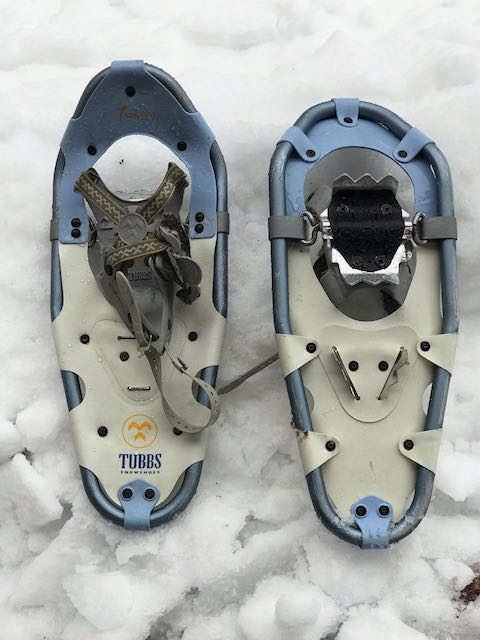
Many hikers also use hiking poles, which should have baskets for snowy conditions, and snow gaiters if there are more than a few inches of snow on the ground.
Hikers should have a pack for extra clothing. Prudence also suggests the following:
- First-aid kit (one per group)
- Thermos with warm drink
- Chemical hand/foot warmers
- Flashlight (with good batteries)
- Whistle
At the trailhead
Temperature and precipitation will dictate what to wear. Cold and wet conditions pose a threat equal to that of dry and cold conditions. Be prepared to start cold and remove layers, as appropriate after your core heats up from exercise.
Examine the trail conditions:
- If you are likely to sink in over the top of your boots, owing to recent snow fall or melting snow, don snowshoes.
- If the trail surface is hard-frozen granular, soft granular, or icy, then microspikes are strongly advised. Winter trails in Norwich are likely to have a few icy spots.
- Consider wearing gaiters if snow is expected to be more than a few inches deep.
On the trail
Be aware of when sunset is. Plan your return by sunset: turn around, if needed, before half of the time between departure and sunset has elapsed.
As you get warmer from exertion, prepare to shed and store extra layers to avoid wetting your inner layers from perspiration.
If at any point, you become uncertain of the route, consider turning around and retracing your steps back to the trailhead.
 Norwich Trails